

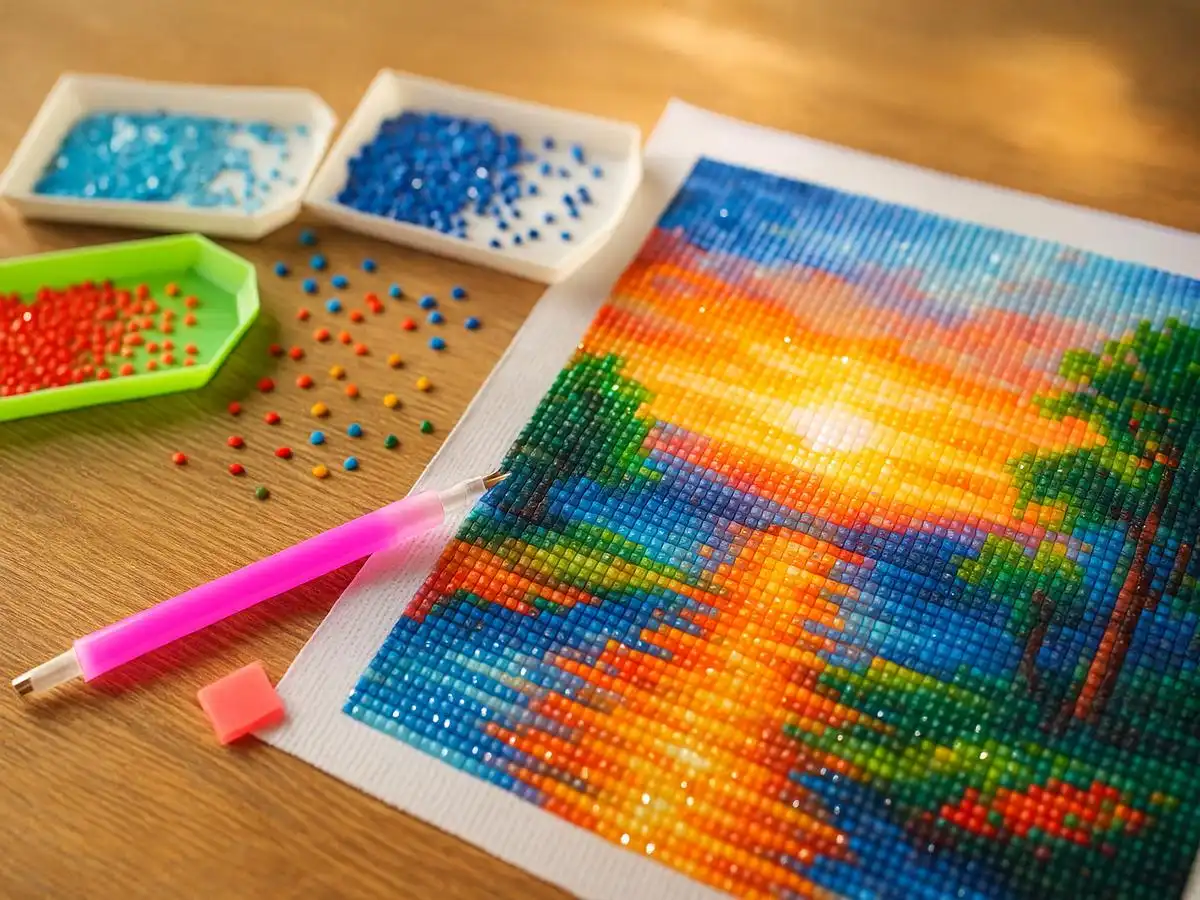
If you’ve ever pressed a tiny, faceted “diamond” onto a sticky chart and watched an image sparkle to life, you’ve probably wondered about the creator of Diamond Painting and the idea behind this oddly soothing craft. Here’s the short version: modern diamond painting; kits, adhesive canvas, color-coded symbols; emerged from China and was formalized by a manufacturing patent from Han’s Yueming (formerly Guangdong Dazu Yueming Laser Technology) in the early 2010s. That patent describes the now-familiar method of placing resin drills onto an adhesive surface to build an image.
So…who actually created it?
While older bead-on-velvet mosaics existed, the creator of diamond painting in its modern, kit-based format is best tied to Han’s Yueming’s patent (inventor: Zhang Jin). Retailers credit 2010 as the breakthrough year, when the idea matured and took off globally; the inventors filed and published the patent in 2013, and the office granted it in 2015.
What’s the idea behind diamond painting?
At its core, diamond painting blends mosaic art, cross-stitch logic, and paint by numbers clarity. A pre-printed canvas carries symbols; each symbol matches a drill color. You use a pen (often with a dab of wax) to lift drills and place them on the adhesive chart. Because the design is mapped, beginners achieve crisp results quickly; yet large, detailed canvases still challenge seasoned makers. In other words, it feels methodical and creative at the same time.
How it works (step by step)
- Prep: Unroll the coded canvas and identify symbols and colors.
- Place: Load the applicator with wax, pick up drills, and set them on matching symbols.
- Progress: Work color by color or section by section; a light pad and trays help with flow.
- Finish: Seal (optional), then frame or mount.
Notably, the patent literature even details production methods (adhesive layers, laser cutting of materials) that make today’s canvases durable and user-friendly.
Why people love it
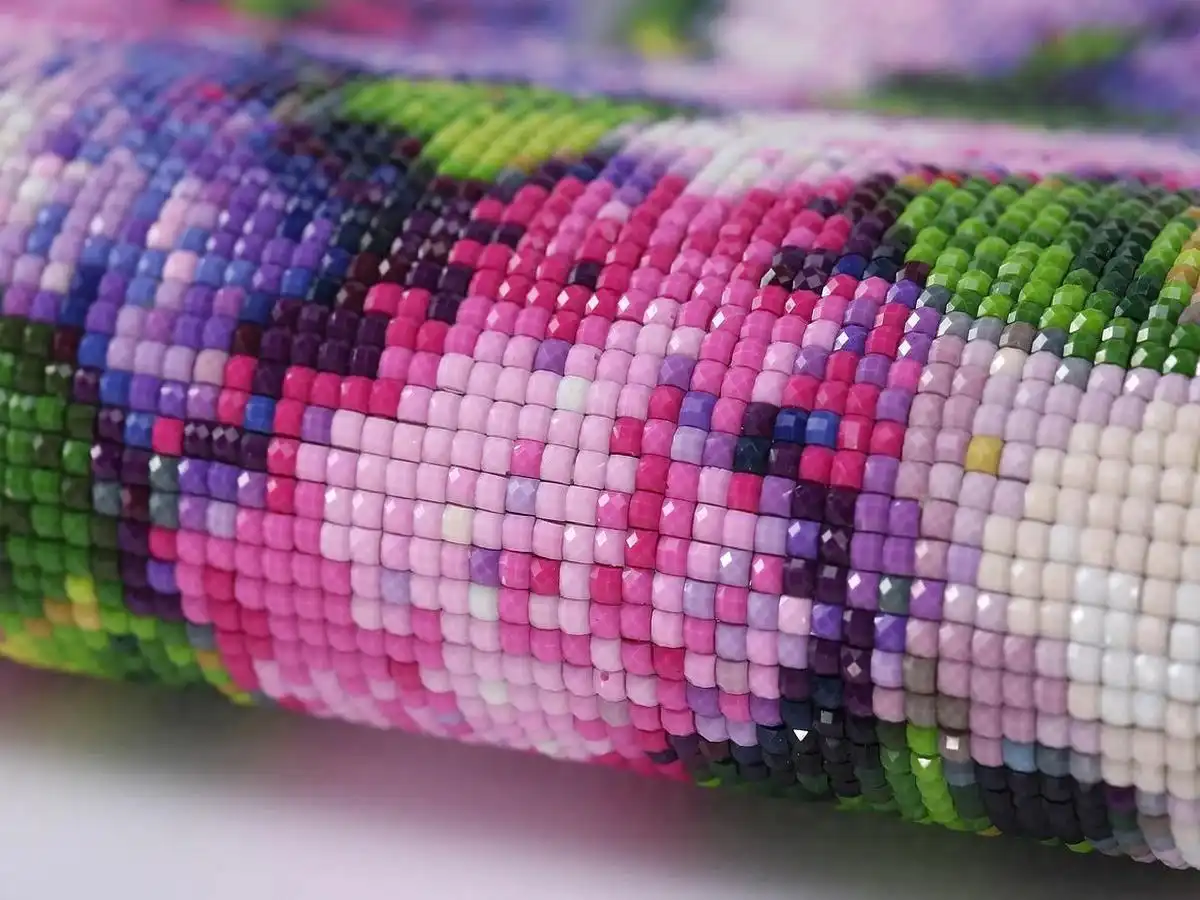
- Stress relief: The repetitive placement induces a calm, meditative rhythm.
- Visible progress: Each section sparkles, instant motivation.
- Accessible creativity: No drawing skills required; you still create something striking.
- Fine-motor focus: Great for concentration, patience, and a quick “win” after long days.
The versatility of products
Diamond painting kits now cover everything: Landscapes, fandom art, Abstract, and even custom photo canvases. You can choose round drills for a smoother glide, square drills for a tiled, ultra-crisp look, or specialty drills for extra shimmer. Moreover, formats range from partial drill (embellish key areas) to full drill (maximum coverage). The ecosystem has grown to include multi-placer tips, organizers, light pads, and sealers; tools that keep the hobby fast and tidy.
Where it started and how it spread
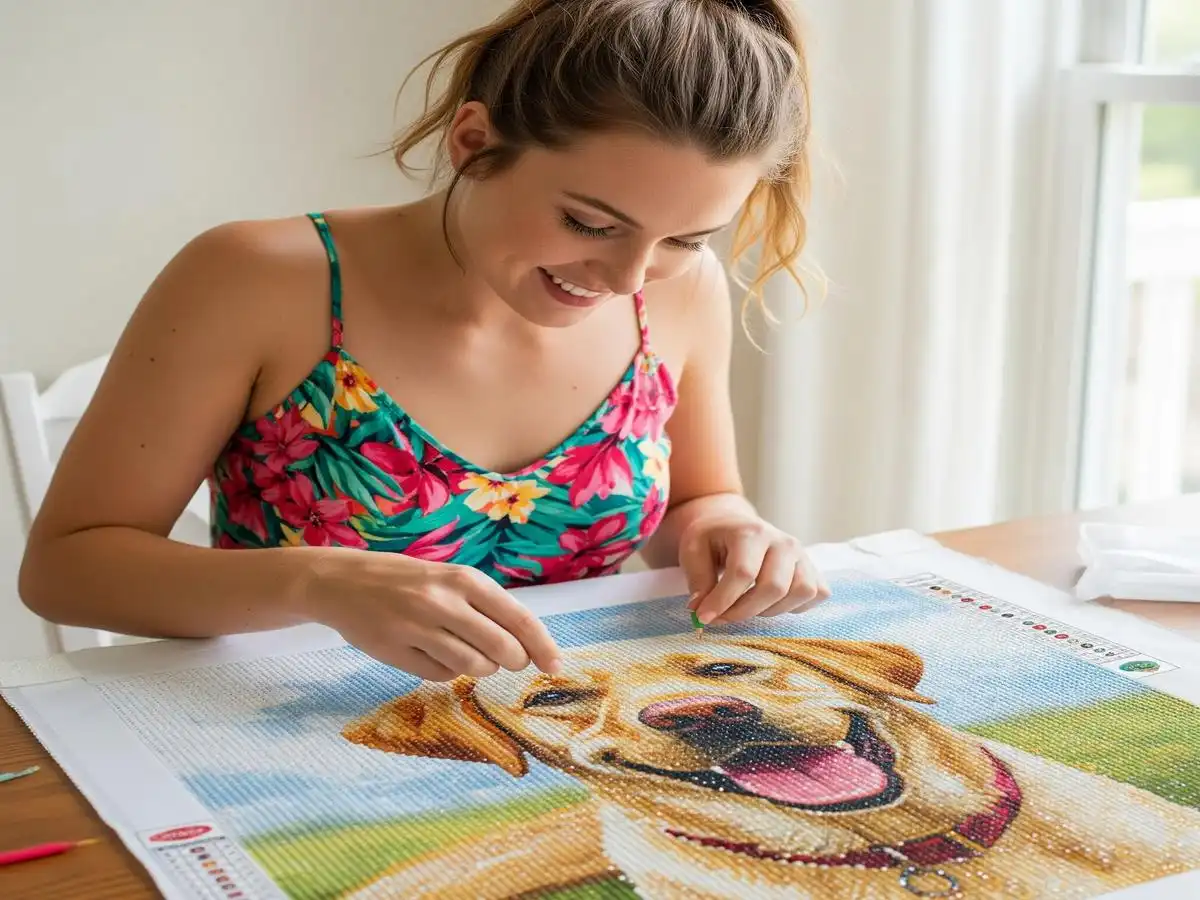
Chinese manufacturers pioneered diamond painting when they upgraded bead-art concepts and packaged them into easy-to-use kits. From then, internet stores, social media time-lapses, and community groups fueled a worldwide surge by the mid- to late 2010s.
Quick tips to get better results
- Work in small sections so the adhesive stays clean.
- Keep drills in labeled trays or bags; reduce color-switching to stay in flow.
- Use a light pad to sharpen symbol visibility; square drills reward precision.
- Finally, frame or mount behind glass or with a sealer for a gallery-bright finish.
When people ask about the creator of diamond painting, they want the story of who streamlined the process and made it simple to enjoy. A Chinese manufacturer patented the idea; adhesive canvases and resin drills, the system we use today. Because the process is clear, tactile, and deeply satisfying, diamond painting isn’t just a trend; it’s a modern craft with staying power.